Elevating Engineering Leadership Through Advanced Cloud Automation Practice
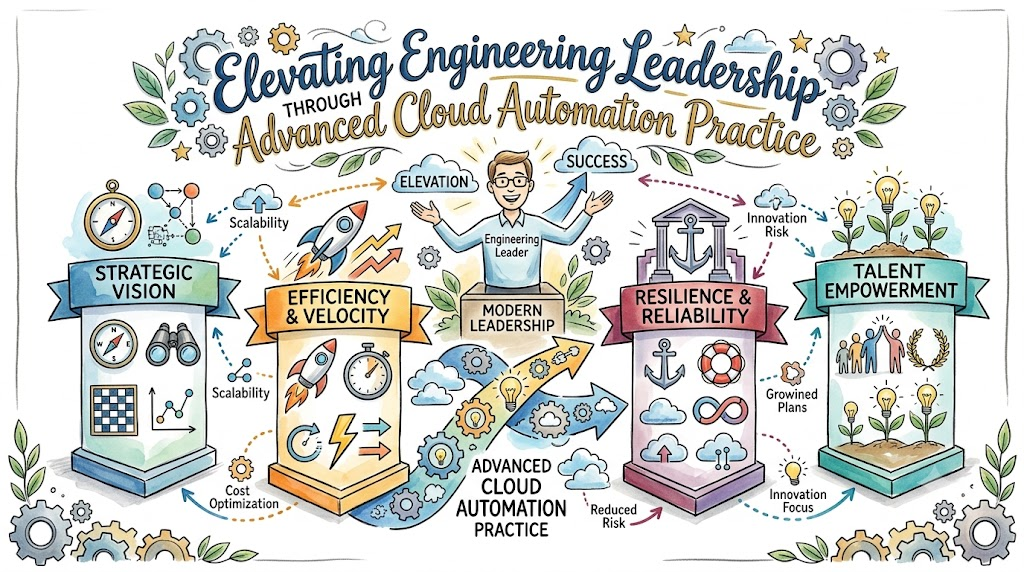
Executive Overview
Enterprise engineering groups continually demand rapid, reliable software releases across complex distributed platforms. Earning the AWS Certified DevOps Engineer Professional establishes an engineer as an authoritative practitioner of scalable cloud automation. Senior developers, platform architects, and infrastructure specialists leverage this program to master automated delivery pipelines, identity federation, and dynamic system self-healing. This operational blueprint analyzes every key evaluation vector, outlining targeted career paths supported by DevOpsSchool to transform tactical administrators into strategic technical leaders.
Practical Scope of the Credential
The AWS Certified DevOps Engineer Professional confirms an engineer’s capacity to orchestrate, safeguard, and maintain resilient production environments across the cloud. Rather than testing passive tool knowledge, the evaluation demands active troubleshooting of distributed failures, multi-account access bottlenecks, and deployment rollbacks. Engineers validate their ability to convert compliance mandates and governance policies into active, declarative code.
Modern enterprises implement advanced continuous delivery methodologies, GitOps practices, and centralized observability pipelines. Consequently, this program mirrors production workflows by assessing how effectively candidates enforce organizational standards without stalling feature velocity. Clearing this assessment demonstrates direct operational mastery over high-availability infrastructure across enterprise sectors.
Target Audience and Industry Demand
Senior system administrators, site reliability engineers, and software architects operating production infrastructure gain the largest competitive advantage from this certification. Security specialists and data platform engineers also leverage its automated governance modules to reinforce multi-account security postures. Furthermore, engineering directors and team leads utilize these principles to establish reliable architectural baselines across multiple software delivery teams.
Technological hubs across North America, Europe, and India actively seek cloud engineers capable of managing large-scale, automated environments while controlling infrastructure costs. Although entry-level engineers must first establish core systems competencies, seasoned engineers use this evaluation to formally confirm their high-tier production experience.
Strategic Value and Career Longevity
Organizations continually retire isolated scripting solutions in favor of automated, event-driven infrastructure. Software frameworks evolve rapidly, yet fundamental operational principles—including immutable infrastructure, canary deployments, and automated drift correction—remain permanently relevant. Engineers who master these core patterns build resilient, long-term careers that easily navigate technological transitions.
Securing this top-tier credential frequently unlocks senior, staff, and principal engineering roles across competitive enterprise sectors. Industry recruitment analytics consistently indicate that verified cloud automation specialists command top-tier compensation packages. This focused educational investment yields sustainable returns because it validates an engineer’s ability to reduce incident recovery times, protect availability, and eliminate expensive human configuration errors.
Program Architecture and Delivery Format
DevOpsSchool delivers the structured curriculum for this program through rigorous, project-oriented modules designed around production scenarios. Learners tackle authentic business challenges involving multi-region data persistence, failed rollouts, and security policy violations. The assessment format prioritizes realistic trade-offs between delivery speed, operational budgets, and systemic resilience.
Participants actively construct resilient deployment workflows, configure cross-account event routing, and orchestrate automated disaster recovery failovers. Detailed architectural reviews and real-time terminal exercises ensure engineers internalize the operational consequences of each design decision. This structured approach directly transforms conceptual cloud knowledge into concrete operational capability.
Platform Distinction
DevOpsSchool delivers specialized training that emphasizes practical, open-source integration and cloud-native architecture over mere test preparation. Seasoned industry practitioners lead every live cohort, bringing decades of active production design and systems recovery experience directly into the virtual classroom. Students work within live cloud terminals, gaining direct exposure to production challenges and modern platform workflows.
The curriculum continuously adapts to reflect modern deployment trends, including advanced Kubernetes orchestration, infrastructure security pipelines, and observability practices. DevOpsSchool provides learners with technical code reviews, resume critiques, and continuous access to an active alumni community. This robust support system ensures that participants acquire battle-tested engineering capabilities that survive real-world production demands.
Operational Tracks and Competency Tiers
Navigating modern cloud credentials requires a deliberate progression from baseline system concepts to specialized platform mastery. Foundational tracks introduce shared operational terminology, security fundamentals, and core cloud primitives. Associate certifications test practical execution within software delivery pipelines and administrative consoles. The professional tier crowns this progression by demanding full ownership over multi-tier systems architecture, compliance enforcement, and automated release cycles.
Specialized disciplines extend these competencies into advanced network routing, automated threat analysis, and modern machine learning operations. Systematically advancing through these tiers protects engineers from knowledge gaps while expanding practical troubleshooting speed. Securing the professional badge establishes a dependable bridge toward enterprise architecture roles and technical leadership.
Certification Progression Matrix
| Track | Level | Target Role | Baseline Requirements | Core Competencies | Recommended Order |
|---|---|---|---|---|---|
| Cloud Foundation | Foundation | Business Analysts, Tech Leads | Fundamental IT literacy | Cloud architecture basics, Billing controls | 1 |
| Cloud Operations | Associate | Systems Administrators | Linux administration, Shell scripting | Fleet configuration, Monitoring, Basic IAM | 2 |
| Application Delivery | Associate | Application Developers | Core programming, Source control | Serverless design, SDK integration, CI/CD | 2 |
| Enterprise DevOps | Professional | Lead SREs, Platform Engineers | Two years production cloud engineering | Enterprise delivery automation, Recovery | 3 |
| Cloud Security | Specialty | SecOps Engineers | Advanced networking, IAM policies | Threat remediation, KMS management, Auditing | 4 |
| Advanced Infrastructure | Specialty | Senior Network Specialists | Enterprise routing, Hybrid networks | Direct Connect transit, Hybrid DNS resolvers | 4 |
Comprehensive Credential Blueprint
AWS Certified DevOps Engineer Professional – Senior Operations Tier
Credential Scope
This credential validates an engineer’s hands-on capacity to design, secure, and manage distributed enterprise systems across modern cloud platforms. It proves decisive mastery over continuous integration pipelines, automated policy governance, and multi-region disaster recovery systems.
Candidate Profile
Platform engineers, senior cloud architects, site reliability engineers, and technical leads who actively manage business-critical infrastructure. Applicants need at least two years of direct operational experience running distributed production systems.
Acquired Competencies
- Assembling multi-stage release pipelines that automate testing, container building, and deployment verification.
- Executing blue-green, canary, and rolling software releases that guarantee zero downtime for end users.
- Authoring declarative Infrastructure as Code blueprints to manage multi-account resources predictably.
- Constructing event-driven remediation workflows that automatically fix misconfigured services upon detection.
- Structuring centralized logging, auditing, and compliance frameworks across enterprise account hierarchies.
Production Project Deliverables
- Construct an enterprise CI/CD pipeline featuring automated vulnerability analysis and manual approval thresholds.
- Implement a continuous drift detection and remediation system using custom event-driven compliance rules.
- Build a centralized telemetry engine that ingests logs across dozens of accounts into OpenSearch for immediate alerting.
- Configure dynamic auto-scaling rules that scale compute resources according to custom application queue depths.
Study Roadmaps
- Two-Week Strategy: Complete scenario-driven practice exams, review enterprise whitepapers on disaster recovery, and dissect CodeDeploy lifecycle hooks.
- One-Month Strategy: Analyze every exam domain blueprint, build multi-account test pipelines in sandbox environments, and practice executing automated rollbacks.
- Two-Month Strategy: Follow a comprehensive training curriculum, write extensive Infrastructure as Code templates, and resolve simulated production outages in hands-on labs.
Critical Pitfalls to Avoid
- Overlooking cross-account permissions, external artifact encryption policies, and fine-grained IAM constraints.
- Memorizing native pipeline tools while neglecting Systems Manager agent configurations and CloudWatch subscription filters.
- Conflating lifecycle deployment events between serverless functions, container services, and virtual machine instances.
Strategic Next Steps
- Same-Track Progression: AWS Certified Solutions Architect – Professional.
- Cross-Track Expansion: AWS Certified Security – Specialty.
- Leadership Track: Certified Kubernetes Administrator (CKA) or TOGAF Enterprise Architecture certification.
Specialization Learning Paths
DevOps Specialization
This traditional path centers on continuous delivery velocity, automated software releases, and reproducible cloud environments. Engineers eliminate manual deployment steps, optimize build scripts, and construct automated rollback mechanisms to preserve uptime. Practitioners master containerization runtimes, infrastructure templates, and pipeline security scans to drive software shipping velocity. Graduates of this path serve as the operational engine for high-output engineering departments.
DevSecOps Specialization
This security-focused track weaves compliance validation directly into early development cycles. Engineers inject static source analysis, dependency vulnerability scans, and container image assessments straight into automated build pipelines. By encoding governance requirements into standard pipeline checks, these professionals safeguard systems without hurting developer velocity. Highly regulated organizations depend on this specialization to pass strict compliance audits.
SRE Specialization
Site reliability specialists prioritize system stability, performance metrics, and rapid incident resolution. Engineers define actionable Service Level Objectives, calculate real-time error budgets, and orchestrate self-healing system behaviors. The track sharpens incident analysis through scheduled chaos experiments, traffic rerouting, and proactive system headroom monitoring. SRE professionals guarantee that core platforms maintain target availability during catastrophic regional outages.
AIOps Specialization
AIOps practitioners harness machine learning algorithms to sift through massive operational telemetry streams and flag anomalies. Specialists construct automated pipelines that ingest metrics, network events, and system logs to identify infrastructure decay before service disruptions occur. This path frees on-call teams from alert noise by replacing static alarm limits with dynamic behavioral models. Adopting this specialization dramatically reduces mean recovery duration during major distributed outages.
MLOps Specialization
The MLOps discipline brings automated DevOps rigor to production machine learning environments. Engineers assemble repeatable pipelines for dataset versioning, model training validation, container packaging, and inference endpoint deployment. Practitioners constantly monitor prediction drift, optimize compute latency, and enforce reproducible model tracking. This expertise connects exploratory data science work with dependable production software delivery.
DataOps Specialization
DataOps applies agile methodologies, continuous testing, and declarative deployments directly to enterprise data architectures. Specialists construct reliable extraction pipelines, scalable transformation jobs, and real-time streaming topologies. The primary objective centers on reducing data processing errors while providing business analysts with fresh data. Modern enterprises rely heavily on DataOps engineers to sustain trustworthy corporate analytics platforms.
FinOps Specialization
This emerging financial discipline pairs aggressive cloud scalability with complete cost visibility and resource efficiency. Specialists build programmatic budget monitors, rightsizing automations, and resource lifecycle schedules to eliminate idle cloud expenses. Practitioners bridge communication between engineering teams and executive management by attributing cloud expenses directly to business value. This operational approach transforms unpredictable computing bills into a planned financial investment.
Strategic Role Mapping
| Engineering Role | Primary Credential Focus |
|---|---|
| DevOps Engineer | AWS Certified DevOps Engineer Professional, CKA |
| SRE | AWS Certified DevOps Engineer Professional, AWS Advanced Networking |
| Platform Engineer | AWS Certified DevOps Engineer Professional, Certified Terraform Associate |
| Cloud Engineer | AWS Certified SysOps Administrator, AWS DevOps Professional |
| Security Engineer | AWS Certified Security Specialty, AWS DevOps Professional |
| Data Engineer | AWS Certified Data Engineer, AWS DevOps Professional |
| FinOps Practitioner | FinOps Certified Practitioner, AWS DevOps Professional |
| Engineering Manager | AWS DevOps Professional, AWS Solutions Architect Associate |
Advanced Follow-Up Credentials
Deep Technical Specialization
Securing the AWS Certified Solutions Architect – Professional represents the most natural technical follow-up after completing the DevOps credential. While the DevOps track tests continuous deployment scripts, monitoring pipelines, and incident remediation, the Architect Professional exam interrogates multi-tier networking topologies, storage tiers, and hybrid cloud migrations. Holding both credentials certifies an engineer as a premier cloud authority capable of designing systems and automating their continuous maintenance.
Broadening Platform Capabilities
Engineers seeking broader ecosystem authority should pursue the vendor-neutral Certified Kubernetes Administrator (CKA) designation next. Alternatively, the AWS Certified Security – Specialty provides deep architectural knowledge regarding data encryption keys, identity federation, and automated threat mitigation. Expanding into container orchestration platforms and advanced security frameworks equips professionals to operate heterogeneous enterprise estates safely.
Transitioning to Engineering Leadership
Practitioners preparing for management, director, or enterprise architect positions should pursue organizational frameworks like TOGAF or practical financial credentials like the FinOps Certified Practitioner. These programs deliberately shift focus away from command-line debugging toward team delivery metrics, multi-year roadmaps, organizational governance, and infrastructure budget management. This strategic pivot equips senior engineers to steer technical investments at the executive level.
Training & Certification Support Providers
The Core Platform Authority
DevOpsSchool functions as an authoritative global training institution committed to advancing real-world engineering practices across cloud architecture, platform engineering, and modern DevOps methodologies. The platform features immersive, project-driven programs curated and presented by senior industry practitioners who maintain decades of live production experience. Rather than offering superficial exam shortcuts, DevOpsSchool trains students to master enterprise-scale infrastructure, multi-account topologies, continuous security auditing, and automated incident troubleshooting.
Through intensive terminal-based assignments, live interactive sessions, and ongoing technical mentorship, the academy helps working professionals master practical problem-solving. Whether you are an engineer pushing for senior leadership or an enterprise upgrading legacy deployment pipelines, DevOpsSchool supplies the comprehensive guidance, updated tools, and production environments required to master modern cloud automation.
General Certification Queries
1. Which factors make this specific professional evaluation exceptionally difficult?
The assessment tests candidate resilience through lengthy, scenario-driven questions that mandate deep, hands-on production troubleshooting rather than simple factual recall.
2. How much production engineering experience should someone possess beforehand?
Candidates ideally need two or more years of daily production experience provisioning, maintaining, and automating distributed cloud infrastructure.
3. Does the testing authority enforce mandatory prerequisite exams?
The testing authority enforces no mandatory prerequisite credentials, though holding an associate-level badge gives candidates an undeniable conceptual advantage.
4. How much study time should working professionals schedule?
Most working engineers dedicate between 6 and 12 weeks of disciplined study, combining live lab projects with architecture whitepapers.
5. What testing parameters and question formats govern the session?
The testing authority allocates 180 minutes to evaluate 75 complex multiple-choice and multiple-response questions.
6. What minimum score indicates a passing performance?
Candidates must secure a scaled score of at least 750 points out of a maximum possible 1000 points to pass.
7. How many years does the granted credential stay active?
The credential remains fully recognized for three years, after which professionals must recertify to demonstrate currency with contemporary services.
8. Does the syllabus lean more heavily toward application code or system operations?
The syllabus balances both sides, distributing focus across automated pipelines, fleet operations, telemetry collection, and compliance auditing.
9. Can someone clear this assessment solely through video courses?
Video courses alone will not suffice because clearing the evaluation requires actual command-line experience configuring resources and resolving broken architectures.
10. How does this credential influence engineering career trajectories?
Engineers possessing this professional credential regularly secure senior platform engineering roles that command higher salaries across the market.
11. Can candidates complete the test from remote locations?
Candidates may take the exam from home via verified online proctoring services or visit an authorized testing center in person.
12. In what practical ways do professional exams differ from associate exams?
Associate exams check fundamental service definitions and straightforward tasks, while professional exams test subtle trade-offs, system resilience, and governance.
Program-Specific Inquiries
1. Which continuous delivery tools receive the highest emphasis during the test?
The evaluation extensively interrogates CodePipeline, CodeBuild, CodeDeploy, CloudFormation, and Systems Manager. Candidates must know how to chain these services across multi-account structures to build automated, secure pipelines that support dynamic rollbacks and drift monitoring.
2. How does the exam evaluate zero-downtime deployment patterns?
Scenario questions require candidates to balance blue-green, canary, rolling, and in-place deployment patterns against business constraints. Test-takers must weigh zero-downtime requirements against deployment costs, DNS routing propagation, and stateful database schema changes.
3. What depth of observability knowledge does the syllabus require?
Candidates must know how to deploy CloudWatch agents, configure subscription filters, stream telemetry through Amazon Kinesis, and visualize logs using OpenSearch. Questions require building real-time alerting architectures that launch automated remediation scripts whenever unexpected errors arise.
4. How rigorously does the exam evaluate multi-account organizational governance?
Governance carries massive weight across the blueprint. Candidates must demonstrate total command over AWS Organizations, Service Control Policies, AWS Config rules for automated remediation, and centralized CloudTrail trail validation across multi-account landing zones.
5. What role does event-driven orchestration play in operational automation?
Event-driven design forms the basis of automated incident response. The evaluation assesses an engineer’s ability to route EventBridge events directly to Lambda functions or Systems Manager Runbooks to correct configuration errors without manual intervention.
6. Do candidates encounter traditional programming and application coding questions?
Traditional application development does not appear, though candidates must write, troubleshoot, and interpret automation scripts, build specifications, pipeline templates, and IAM policies in JSON or YAML.
7. How does the assessment test business continuity and disaster recovery?
Scenarios require candidates to design automated backup, replication, and failover architectures. Engineers must satisfy distinct Recovery Time Objectives (RTO) and Recovery Point Objectives (RPO) using pilot light, warm standby, or active-active configurations.
8. What practical tactic helps engineers unpack complex exam questions?
Reading the final interrogative sentence first identifies the driving constraint—such as lowest operational overhead, minimal cost, or zero downtime. This tactic lets you eliminate incorrect choices that fail the primary requirement or violate least-privilege access rules.
Strategic Verdict
Committing to this professional-level engineering certification requires an intense investment of personal time, focus, and deliberate hands-on lab experimentation. Candidates who treat the program as a superficial checklist item will struggle because the scenario-driven questions effortlessly expose shallow memorization. The testing framework purposely filters out applicants who lack genuine troubleshooting instincts.
Approaching this curriculum as a rigorous blueprint to master production engineering elevates your technical acumen. It forces you to abandon brittle console tweaks in favor of declarative code, systematic automation, and resilient architectural thinking. For engineers dedicated to driving high-performance cloud operations, this credential delivers immense, lasting career value.
Leave a Reply