Simple Ideas for Running Many Machines with RobotsOps
Introduction
Big metal helpers lift heavy parts and sort packages every day. Yet, keeping hundreds of them moving without trouble takes hard work. Wires loosen, parts wear down, and code can freeze.
Smart crews use a fresh method named RobotOps to run their gear smoothly. This setup borrows the best computer tricks to care for working bots.
Years ago, our crew repaired broken machines inside noisy packing hubs. We watched one small software glitch pause an entire work shift. Because of that mess, we built RobotsOps to share easy guides with future inventors, hobbyists, and plant teams.
Understanding Modern Robotics Operations
Daily machine care is what we call Robotics Operations. You track gears, update brains, and fix broken parts before bad things happen.
Picture a friendly pit stop crew at a big car track. One worker swaps worn tires, while another cleans the shiny windshield.
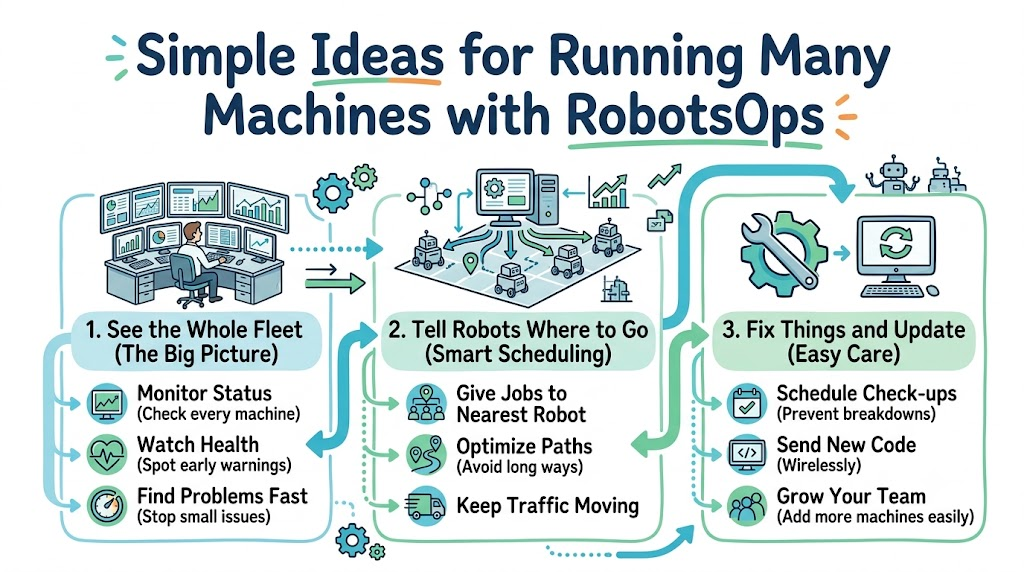
Crews use screen boards to follow each bot across the concrete floor. They spot hot motors and weak batteries right away. Because crews spot tiny warnings early, the helpers finish their chores without sudden stops.
Easy Ways to Guide Autonomous Mobile Robots
Rolling carts known as Autonomous Mobile Robots zip around modern storage halls. These nimble carts carry heavy wooden bins without any floor tracks or human drivers.
They flash invisible laser beams to measure distances to walls and feet. In busy hubs, these helpers carry heavy boxes while workers stay safe.
Workers skip heavy lifting and protect their backs from painful strain. The carts take the hard loads, so people can pack items and solve clever puzzles.
Setting Up Smart Robot Fleet Management
Guiding thirty rolling helpers at once calls for Robot Fleet Management. This setup lets you steer, check, and refresh every machine from a single desk.
Software watches live signals to keep carts on their best routes. When a cart loses power, the brain routes it to an open plug. Next, a fresh bot rolls out to carry the load.
Factory reports show that fleet software cuts random line stops by a third. It turns a crowded room into a neat, cheerful squad.
Running Tough Gear with Industrial Robotics
Big assembly shops count on Industrial Robotics to weld, press, and shape heavy iron. Mighty metal arms lift car frames and spray shiny enamel coats onto steel doors.
These mighty tools need rigid frames, fast chips, and smart guards. Technicians set light gates all around each metal arm. If an operator steps too close, the steel arm halts instantly.
Keeping people safe guides every factory build. Learners study safety switches and arm controls on RobotsOps to protect floor workers while speeding up daily output.
How Teams Test with Robot Simulation
Smart coders never run raw code on expensive steel arms right away. Instead, they try out their moves inside a Robot Simulation on a PC screen.
Builders craft digital twins of their bots inside fake warehouse rooms. They test wall taps, slow cameras, and slick tires with safe clicks.
Robotics mentor Sarah Chen explains that digital tests spare teams costly physical repairs. A virtual crash costs zero coins. Because of that, teams squash every bug before flicking real power buttons.
The Real Power Inside Robotics Software
Shiny metal makes the frame, but Robotics Software does the actual thinking. This clever code directs the helper to scan, decide, and act.
Vision code grabs pictures from lenses to spot crates or workers in the aisle. Wayfinding code selects the cleanest path around any box.
Coders write simple logic so motors spin without bumping into walls. Solid code keeps the helper calm, even inside loud and bustling rooms.
Helping Work Grow with Robotics Automation
Growing businesses adopt Robotics Automation to wipe out slow, dull tasks. Keen machines organize wooden crates, stack cold milk cartons, and inspect egg boxes for cracks.
One family farm used rolling picker helpers to gather sweet berries. The bots plucked fruit twice as fast and crushed way fewer crops.
This automation lowers retail costs and brings good food to market sooner. It also frees folks to do creative tasks instead of painful, back-breaking labor.
Inside a Robotics Operations Center
A modern Robotics Operations Center looks like mission control for a moon shot. Technicians sit before wide display screens and monitor every single machine.
They view wheel speeds, heat numbers, and route maps across long shifts. If a cart gets stuck between two pallets, an operator steers it away with a stick.
The command hub keeps watch day and night. It acts like a lighthouse that stops tiny machine hiccups from causing full factory closures.
Writing Easy Logic with ROS 2
Programmers across the globe build smart machines with ROS 2. This shared toolkit acts like speech wires between machine parts.
The camera sends pictures to the brain, and the brain sends spins to the wheels. It runs on tiny boards and huge factory rigs alike.
Students learn key ROS 2 nodes, packages, and code tricks on RobotsOps to launch neat projects. Its tough message lines make it the favorite pick for modern bots.
Robot Types and Everyday Jobs
Selecting your setup comes down to your space, needs, and project size.
| Machine Style | Main Task | Key Tools & Sensors | Great Perk |
|---|---|---|---|
| Stationary Arms | Welding, stacking parts, and bolting metal | Solid frames, safety beams, position sensors | Swift motion, tight accuracy, and worker safety |
| Rolling Carts | Hauling cartons, rolling down aisles, scanning floors | Laser rangefinders, live route maps, ROS 2 links | Steers past clutter and cuts back fatigue |
| Screen Twins | Catching code errors inside digital spaces | 3D room shapes, fake cameras, physics code | Zero repair cost and speedy code fixes |
Steps to Launch Machine Fleets
Crews follow four easy actions to roll out gear without bugs:
- Step 1: Check code on screens. Run every plan inside virtual maps to spot mistakes early.
- Step 2: Mount safety stops. Set red stop switches and laser walls around moving parts.
- Step 3: Link live data feeds. Wire machine status lines to a single board for quick health checks.
- Step 4: Push code to few bots. Test code on two bots first before updating forty bots.
Key Roles for Machine Crews
Different workers handle distinct parts of daily bot upkeep:
- Hub Watcher: Sits at the master console, reads alert lights, and guides trapped bots out of tight spots.
- Floor Mechanic: Steps across the plant floor, swaps depleted packs, screws bolts, and wipes dirty glass.
- Code Specialist: Crafts release scripts, watches motor heat, tweaks pathing rules, and refines floor maps.
Frequently Asked Questions About robotsops
What does RobotOps mean in plain words?
It means caring for machine code and parts using smart computer and internet tools.
Why should crews test bots inside computer games first?
Simulations let builders bump virtual bots without smashing costly iron gears in real rooms.
How do rolling carts spot walls and humans?
They bounce light beams off nearby objects to draft floor charts and dodge items.
What chores happen inside a machine watch desk?
Watchers study wide monitors, scan machine status, and steer trapped carts with handy sticks.
Why do so many coders pick ROS 2?
It acts like helpful telephone wire that links cameras, chips, and drive wheels together cleanly.
Can factory bots get code updates through the air?
Yes, modern crews send fresh features over wireless links without touching any physical cables.
How do fleet brains avoid traffic jams in narrow halls?
The main program maps separate lanes for each bot so units never bump noses.
What keeps large metal arms safe around walking workers?
Laser light curtains cut electricity right away when someone steps past the danger line.
Where do novices read simple tips on fleet care?
Curious learners browse RobotsOps to read tutorials on basic setups, software, and fleet tools.
How does early upkeep save cash for shops?
Heat sensors spot warm motors early, so workers fix parts before a loud snap halts work.
Last Words on Machine Care
Automation changes how people build, haul, and enjoy goods each day. Crews that master everyday machine care create calm rooms and speed up output. By checking virtual models, reading live heat signals, and using clean tools, teams keep their metal pals rolling strong.
Leave a Reply